
Making Mimsy
The character creator from a game I never finished, finally on its own.
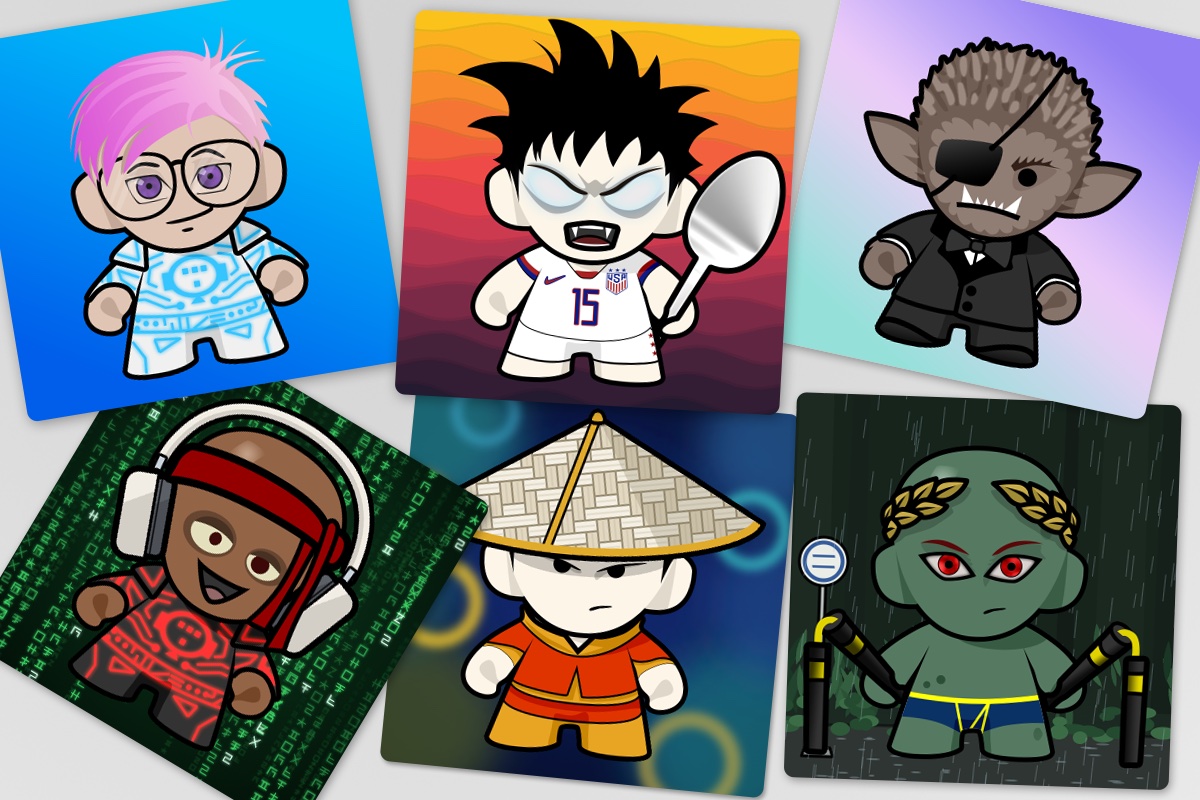
For years I wanted to build a game, and the part I got furthest on was its character creator. mimsy.me is that creator, spun off on its own: pick a human, a werewolf, a zombie, or a vampire, layer on an outfit, headgear, a face, and a background, and download an avatar that is yours to use however you like.
Try it at mimsy.me; the source is open on GitHub.
It started with Brainchef
Many years ago I was infatuated with Brainchef, a retro 8-bit online game that pitted humans against zombies. I loved it enough to volunteer, and in 2009 I drew new body parts for its zombie character creator, all of which had to work as layers alongside the art already in place.
That stuck with me, and for years I had a low-priority side project to reinvent the whole game. Instead of humans against zombies, it would be a three-sided battle of humans, zombies, and werewolves, with a theme that rotated over time to match current events and whatever the internet was obsessed with that week. I was going to call it mememe, as in meme-me: make me into a meme.
The game never got past rough prototypes with partial functionality. But it did get a visual style, and most of that came out of its character creator, built on the same idea Brainchef taught me: mix-and-match layers that combine into something custom and unique.
Three tries
In 2023 I decided to build just the character creator, as a stand-alone tool anyone could use to make an avatar for their social profiles, or for whatever else they wanted. I made progress, but again, not as far as I wanted.
Then in 2026, building software stopped being the bottleneck. With Claude Code doing the building, I dusted the project off once more and in March took it all the way to a working, deployed prototype. In my mind, that was the real birth of this project.
In October I came back to add features from the original plan, a randomizer and snapshots, along with a handful of new parts. This time I also wanted to see how Claude would do at drawing those parts itself.
How it plays
The builder is a stack of rows: character, body, eyes, mouth, outfit, headgear, accessory, and background. The up and down arrow keys move between rows, and the left and right arrow keys flip through the options in the active one, shown on blank figures to either side so you can see each part before you pick it. Choosing a character swaps the body underneath everything else. Humans come in three skin tones and zombies in four stages of decay, and some parts belong to one character only: fangs for the vampire and the werewolf, an axe for the zombie’s head.
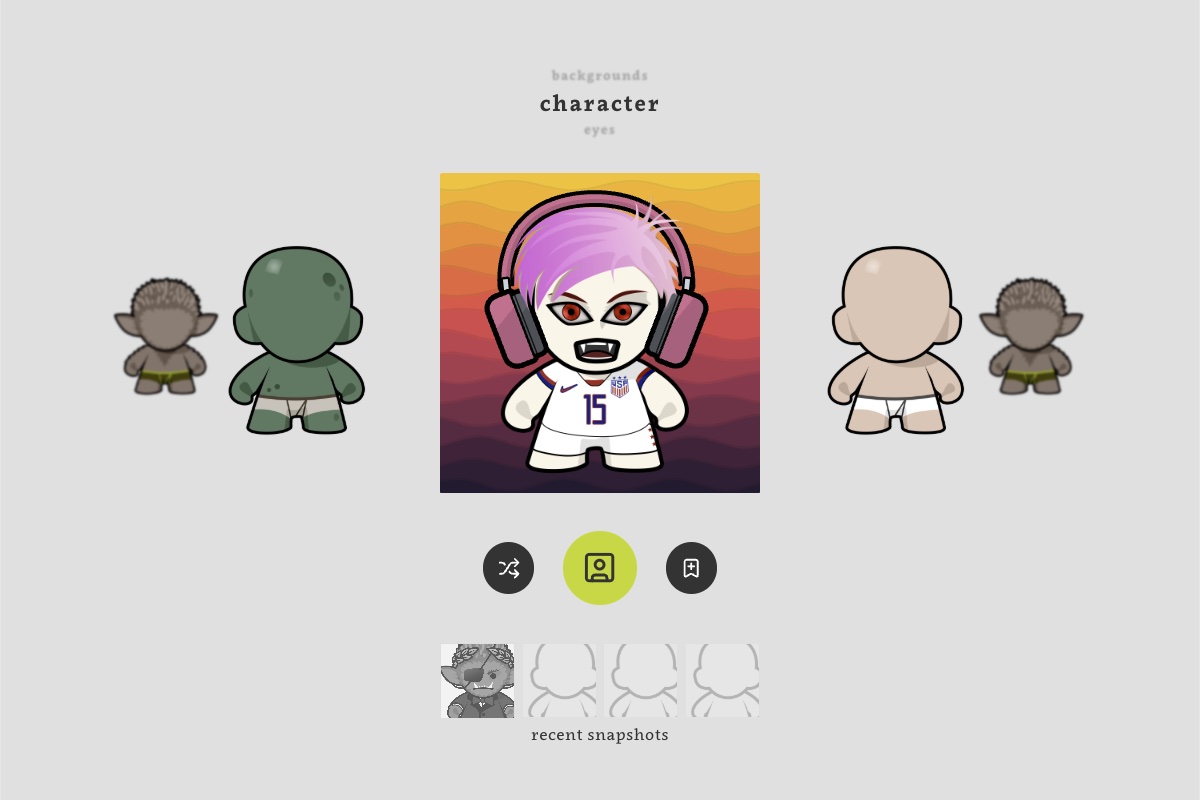
Three buttons sit under the stage. Randomize rolls a whole new character with a random part on every layer. Save snapshot keeps the current look, and the last four appear underneath, one click from coming back. And “Create me” downloads the avatar as a 400 pixel square PNG, ready to use as a profile picture.
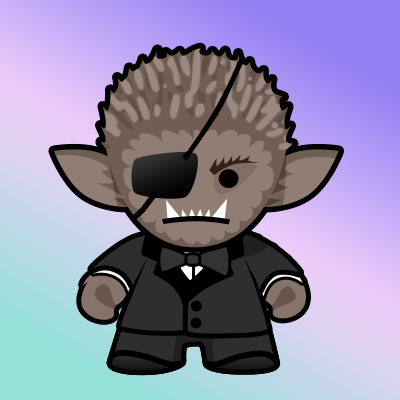
Every avatar is a stack of transparent 800 by 800 pixel images, drawn on the same template so they line up without any code placing them. Adding a part is just adding a file: the folder it goes in is its layer, and its file name is its label in the picker, so a new hat is one image in the headgear folder.
Can Claude draw?
As with my other recent projects, I never edited the code by hand: I described what I wanted and judged the results. The art was the new experiment. I drew the original characters and parts myself, and in October I asked Claude Code to draw new ones that follow the layering, match the visual style, and pass my own judgment as an artist.
It drew them as hand-written SVG, and along the way it added support for SVG parts alongside the PNGs, which is a real win: vector parts scale cleanly and could be recolored in the future. A few of its parts made it in, including the headphones, the bamboo hat, and some of the backgrounds.
But it isn’t simple yet. Each part took a lot of iteration and false starts, and most attempts didn’t make the cut. One early lesson was that it couldn’t eyeball: guessing coordinates put a part 5 to 15 pixels off, and every miss was visible, so it had to measure against the body and head outlines from my templates and check every draft on every character. For now, I still think of making parts as a human, manual process. What changed is how I draw them: with as many vector elements as possible, so they can become SVG later.
Why mimsy
The name comes from Lewis Carroll’s “Jabberwocky,” another of my fascinations: “All mimsy were the borogoves.” I like that it sounds like the original mememe, that it hints at whimsy, and that it is an absurdly short, memorable domain name.
What it accomplished
After three tries, the character creator is finally a real thing anyone can use, and building it no longer depends on finding time to write the software. Rolling the randomize button is a small slot machine, and a tuxedoed werewolf with an eye patch and a laurel wreath is exactly the kind of thing I hoped it would make.
It has limits. Picking parts works with the arrow keys only, so on a phone or tablet there is no way to choose a part yet. Some layers are still thin, with only six shared mouths. And the art is still the slow part: Claude can draw, but not yet reliably enough to hand it the pencil.
Next come more parts, until every layer has at least ten good options, a few themed sets, and a way to pick parts by touch.